An official website of the Town of Pierce, Colorado.
Town of Pierce Colorado · Est. 1902

Our History

How Pierce began as a railway siding in 1869, and the photographs that record it.

In 1869 the Denver Pacific Railroad began laying track towards Cheyenne, to connect Denver with the Union Pacific. On 8 November 1869 a side track was laid and named “Pierce”, after General John Pierce, President of the Denver Pacific Railroad and formerly a General of the Union Army.

A well was dug at the Pierce siding to supply water for steam locomotives. A boxcar beside the track became the first building in Pierce; the next was a house for the track foreman’s family. The first Postmaster was Richard Sullivan, in 1903. In 1907 the Post Office moved from the depot on the east side of town to where the Senior Center is now.

Pierce was formally established as a community in 1918. The first Mayor was J.F. Munger. The town newspaper, the Pierce Leader, was founded the same year. The Pierce Hotel stood where the Post Office is now.

Trains mattered a great deal here. The government gave land grants, and to keep the land people had to build something to live in and work the ground. The trains carried what they produced to the towns that would buy it, and carried people to places they could not otherwise reach.

The first families

Among the earliest to arrive were the Snow family, and Jay Jones with his sister Jessie. When people first came here there were no trees — only prairie. They built sod houses, or went to the mountains for wood to build log ones. All their water was carried from wells.

Irrigation was everything to these farmers, so ditches were dug to bring water down from the mountains.
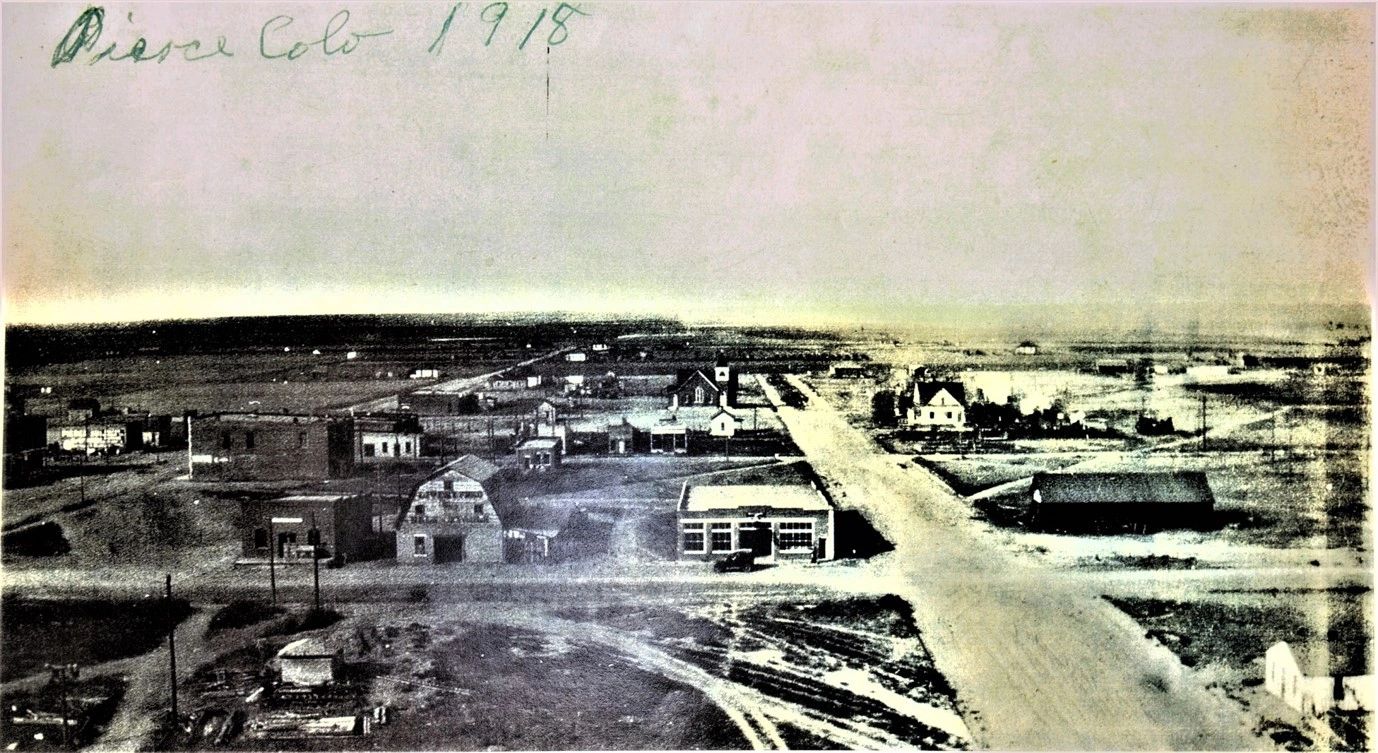
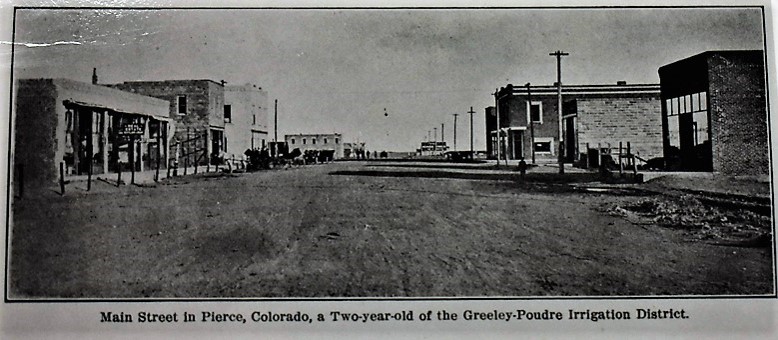
A wide dirt street with low wooden buildings along one side, open prairie beyond.
Looking west from the Roggen Elevator site, 1918. Pierce’s original Main Street is what is now Shafer Avenue, on the right.
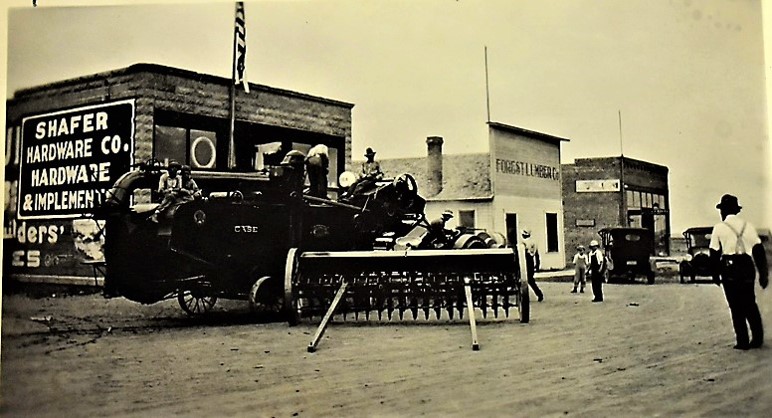
Horse-drawn farm machinery standing in front of three wooden storefronts.
1907. A threshing machine and wheat drill outside Shafer Hardware. The middle building was Forest Lumber Yard and the third a blacksmith’s shop.
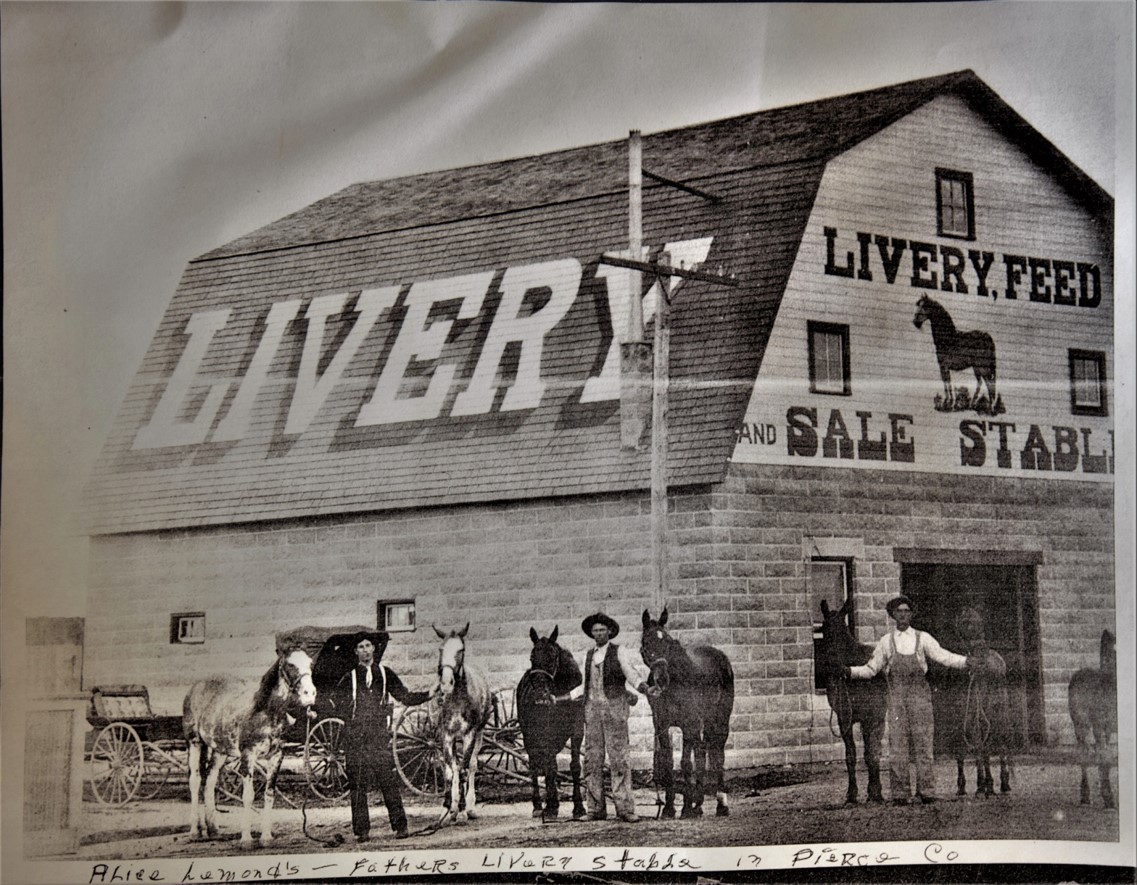
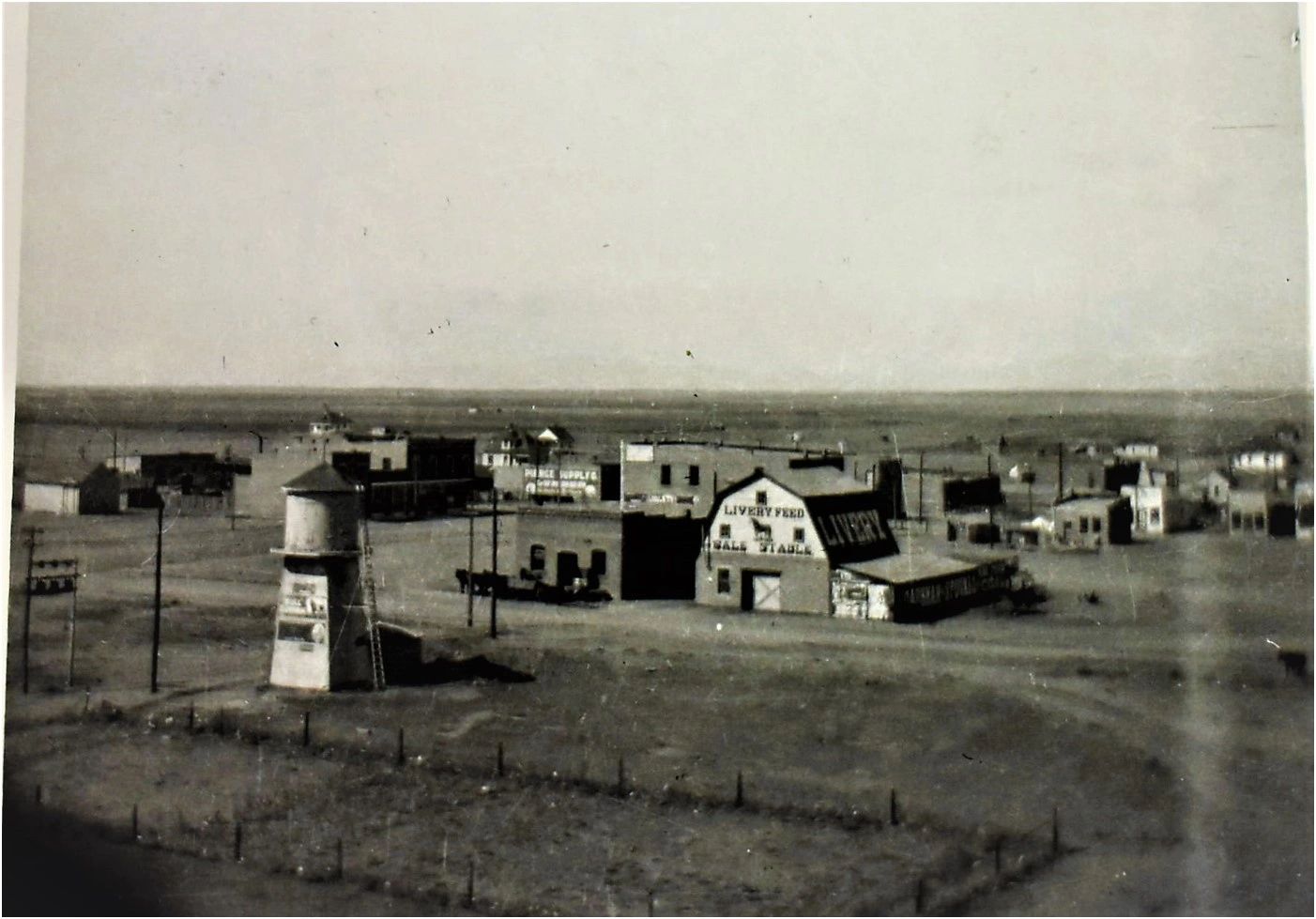
A tall wooden stable building with a pitched roof and wide doorway.
The livery stable, 1911, on what is now First Street. Van Why’s diesel repair shop stands there today.
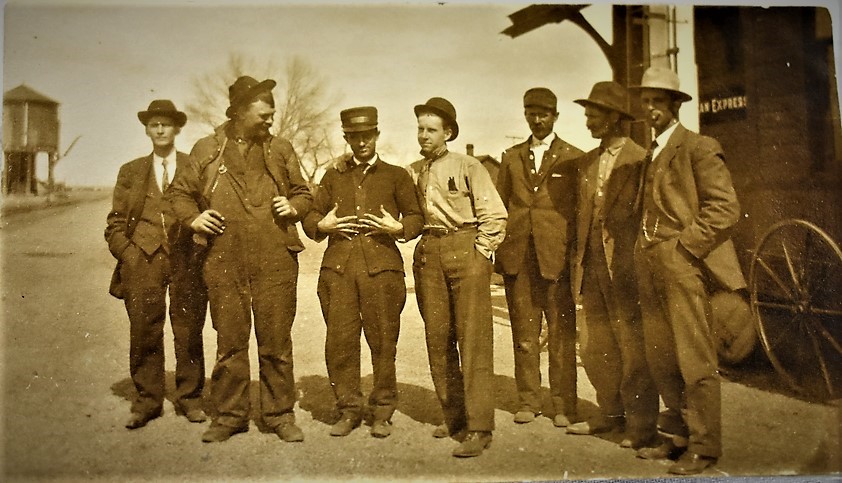
Five men in work clothes and caps standing together beside a railway building.
Railway staff in 1911. John Larson, section foreman; Jim Kenny, signal maintainer; Floyd Parker, agent; R.E. Shanafelt, operator; and on the far right, Fred Vittatoe.
A street scene in early Pierce.
Taken in Pierce in 1911 or 1912.
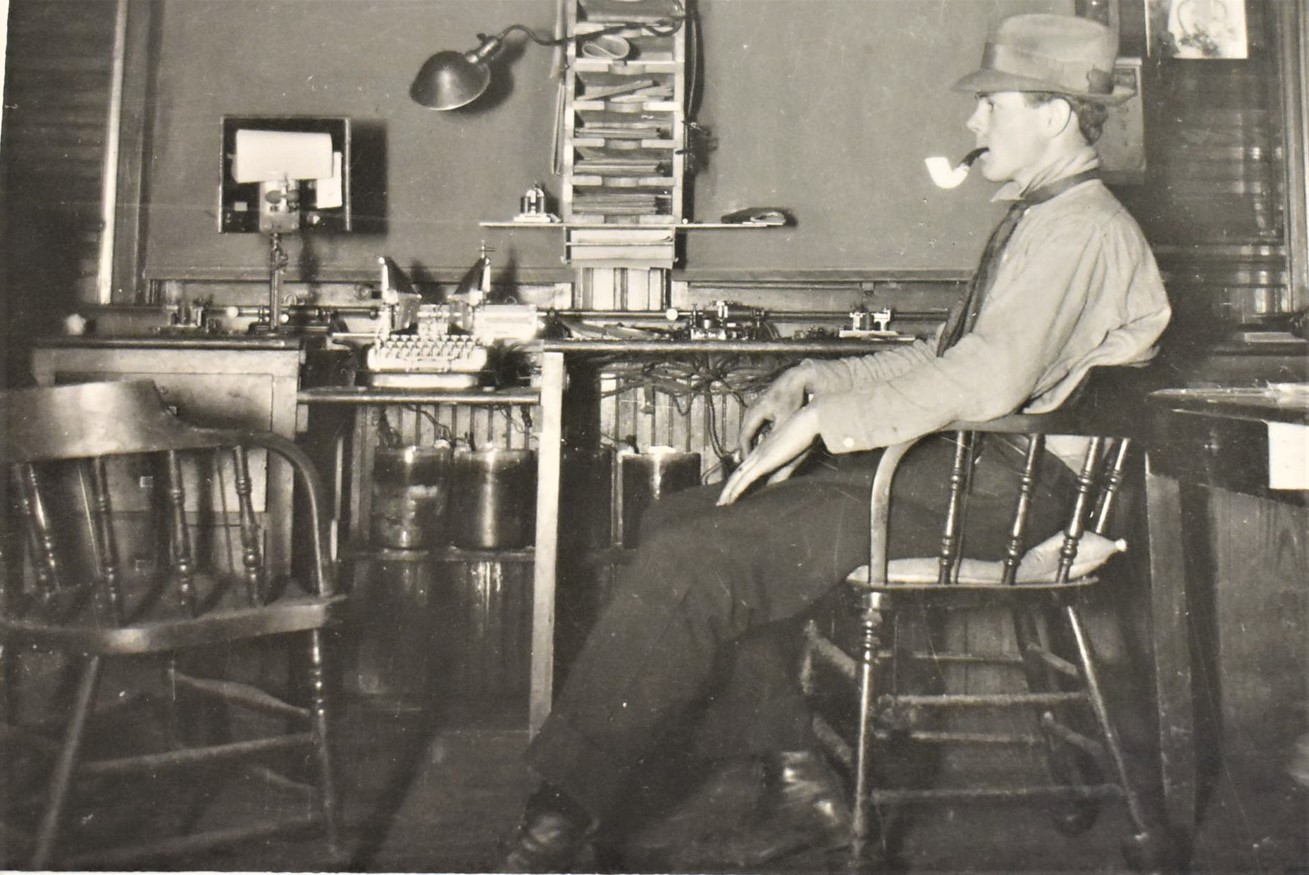
A portrait of a man in a waistcoat and tie.
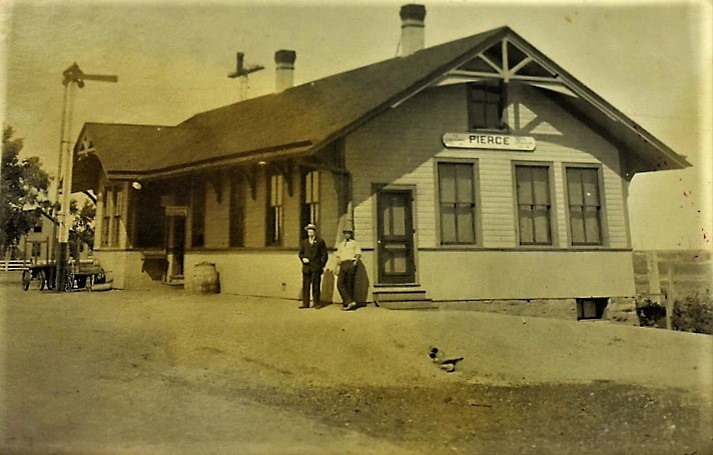
R.C. Hiatt, who operated the Pierce depot from 1911 to 1915.
A single-storey wooden railway depot with men standing on the platform.
The Pierce train depot in 1913, with depot operator R.C. Hiatt on the right.
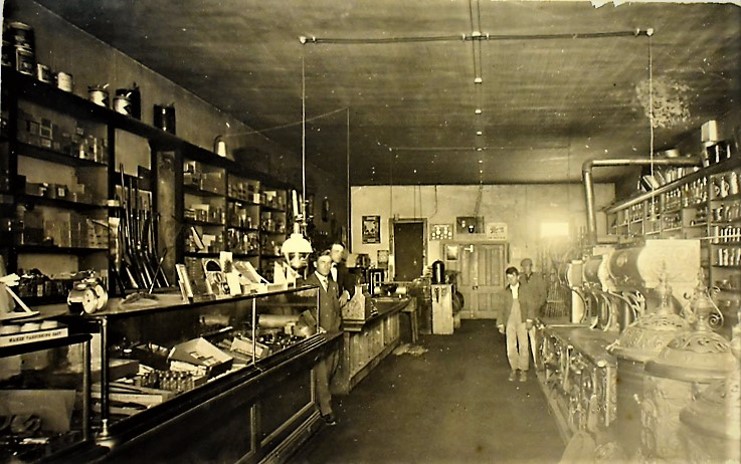
Four men standing outside a hardware store with goods displayed in the window.
Mr Shafer’s hardware store, now Grubby’z. Left to right: John Shafer, John Stovall, George and Ray Martini.
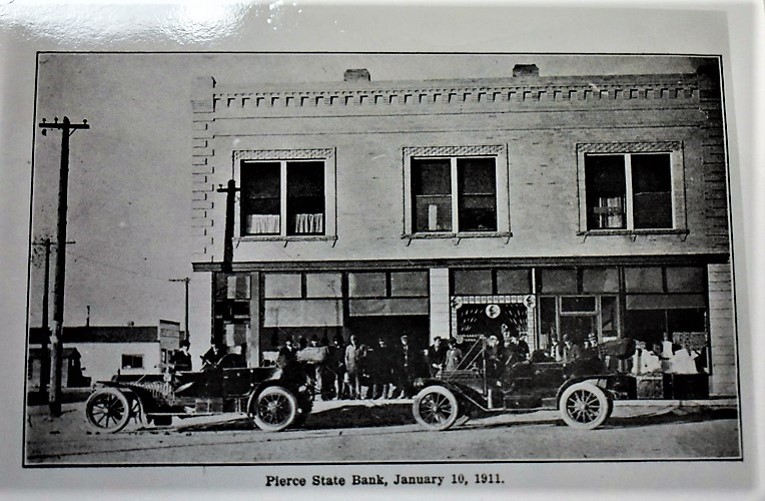
A brick corner building with tall windows and a bank sign above the door.
Pierce State Bank, one of several banks that served a growing community. Plains Market stands on the site now.
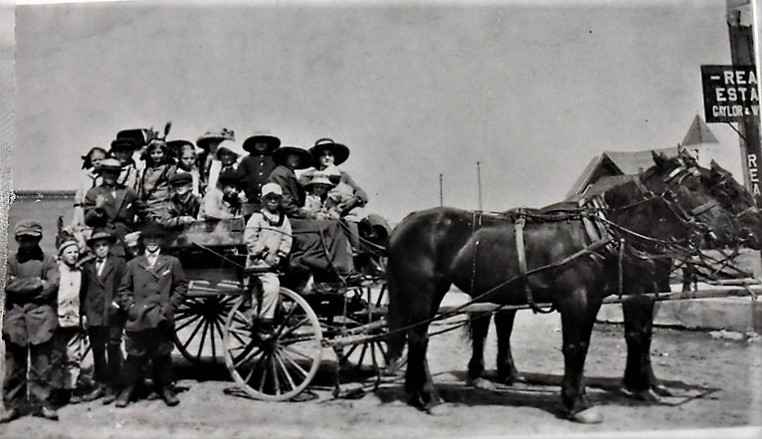
An early motor bus with a canvas top, children and adults standing beside it.
The Pierce school bus in 1919, outside the Gaylor real estate office on Main Street.
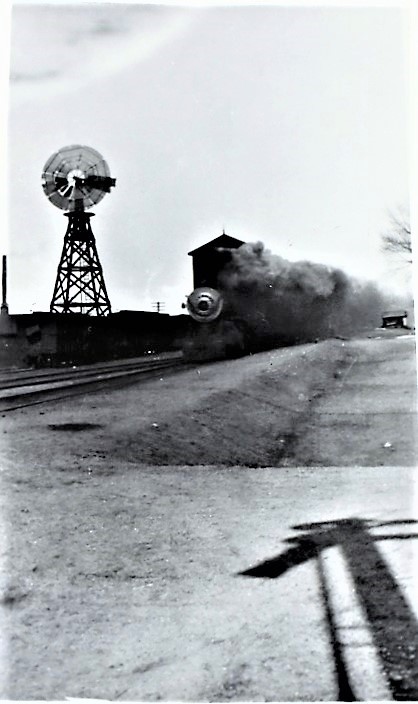
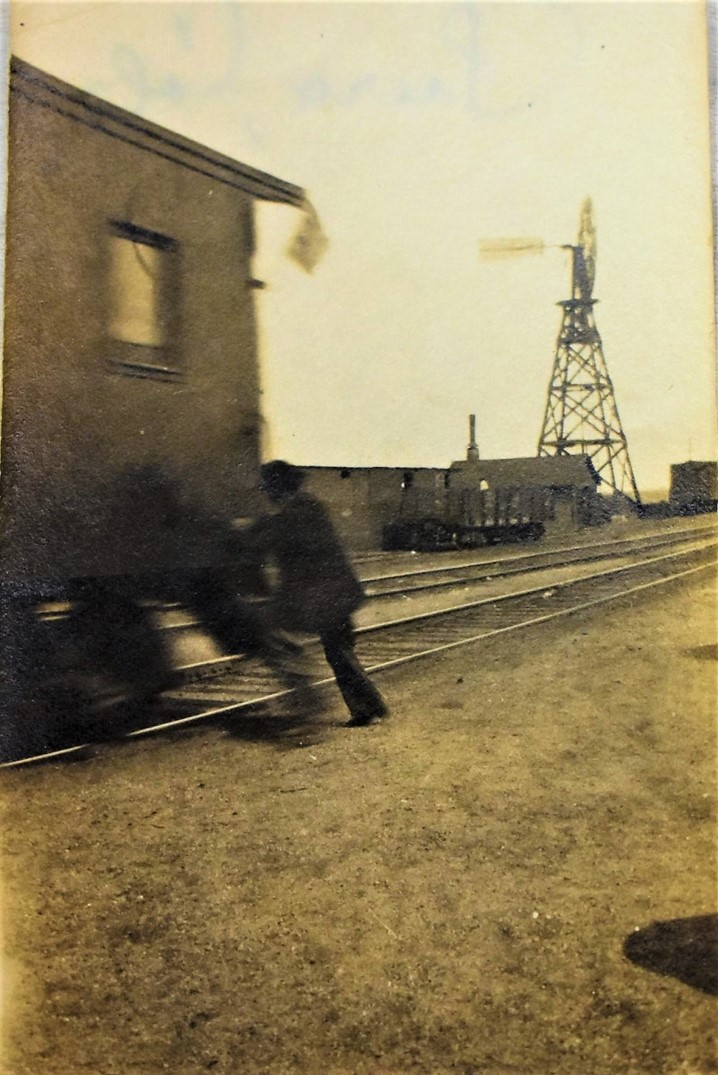
A lattice windmill tower beside a raised wooden water tank.
The windmill north of where the Roggen Elevator now stands. Its well fed the water tank that refilled passing steam engines.
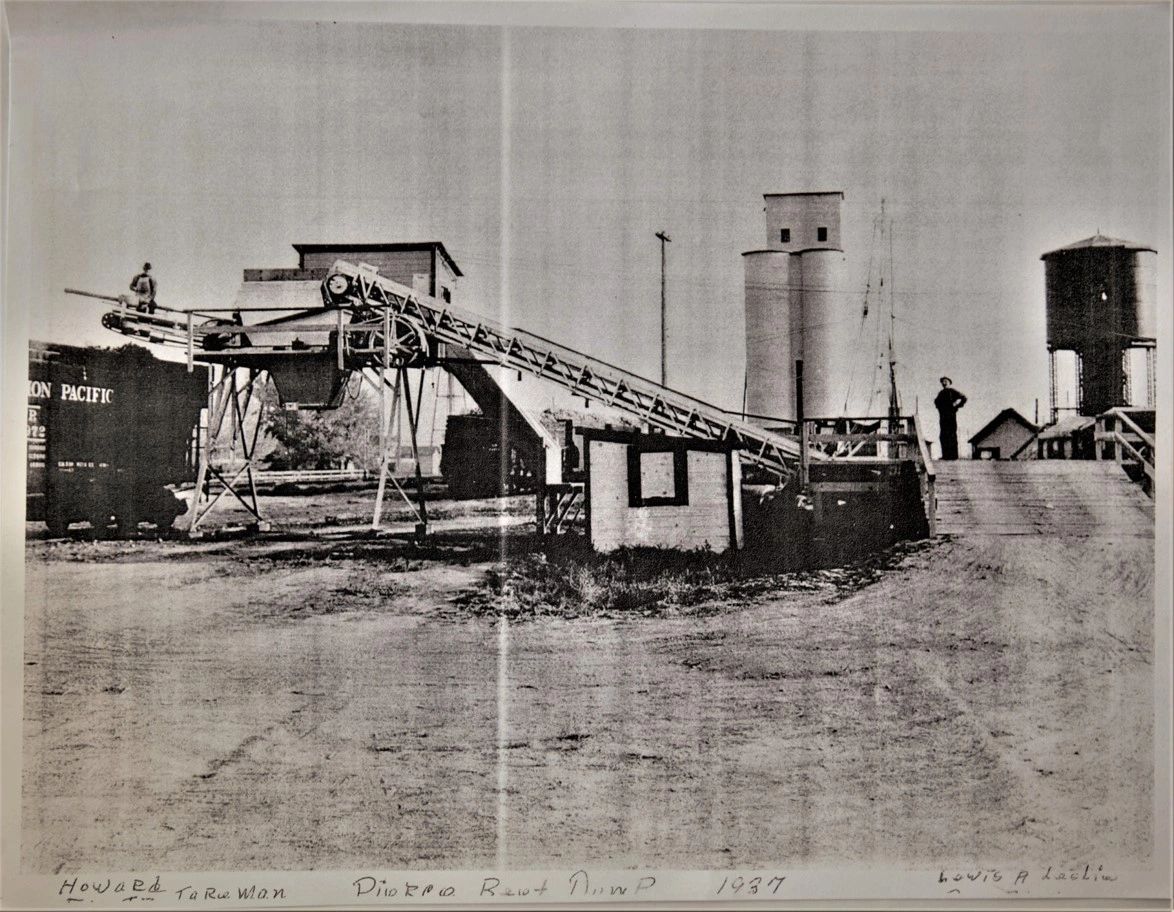
A wooden loading structure beside railway tracks, with a grain elevator behind.
The Pierce beet dump in 1937, along the Union Pacific line. The Roggen Elevator stands in the background.
Irrigated fields stretching to the horizon under an open sky.
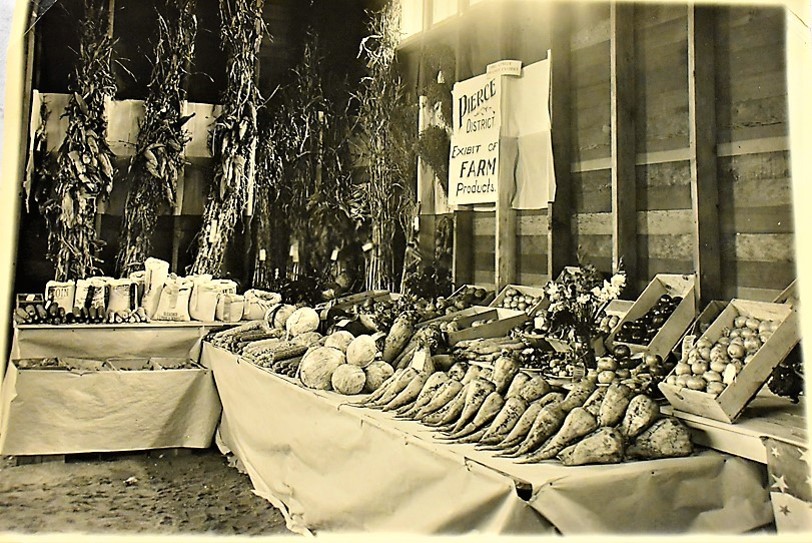
Once irrigation reached the area, Pierce became a productive agricultural community.
A tree-lined street with parked cars and single-storey shopfronts.
Looking east down Main Street after irrigation came to the area. The Pierce Senior Center building is on the far left.
A view across rooftops towards the centre of a small town on flat land.
Looking south-west towards downtown Pierce.
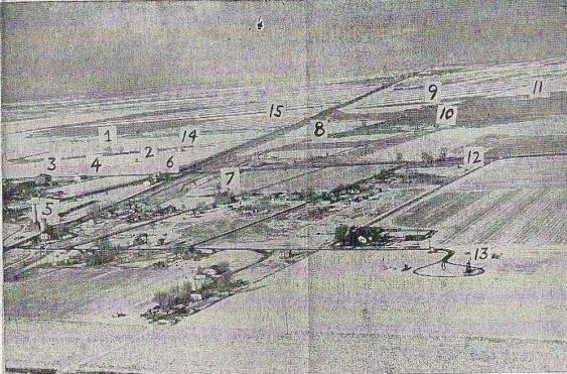
An aerial photograph of the town and surrounding fields, with well sites marked.
Pierce oil field well locations, photographed from the air looking north-west over the town. From the Greeley Tribune, January 1958.

Winters

There have been many blizzards here. After one in 1913 the farmers set about clearing the roads themselves: they built a large wooden “U”, hitched ten head of horses to it, and cleared the roads every day.

In 1949 it snowed without stopping and the wind blew for three days. Snow was driven through cracks into people’s attics and into the sheds, where cattle were smothered. Even the trains were snowed in.

Was this page useful?

No

We read every answer, but we can't reply here. To reach the Town, use the contact form or call (970) 834-2851. Please don't include personal details.